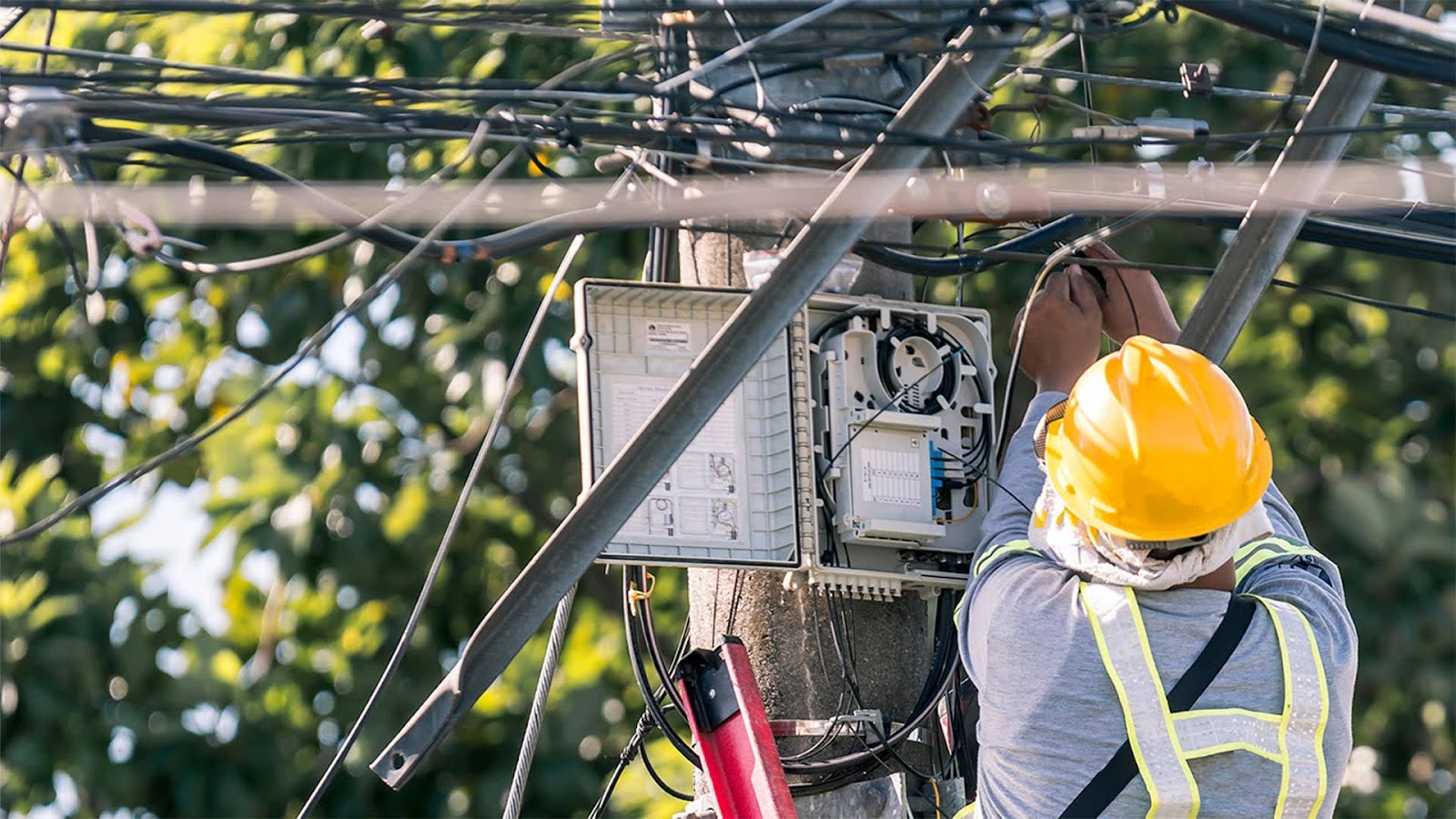
Fiber networks aren’t judged by how quickly they’re built — they’re judged by how reliably they operate. Outages, alarms, inspections, and SLA-driven response times become the daily battleground where operational excellence is proven. Yet for many operators, O&M remains the most reactive and fragmented phase of the entire lifecycle.
It’s not because fiber itself is inherently chaotic.
It’s because most operators end up managing O&M work as a series of isolated tasks, handled in disconnected tools that never build toward a broader understanding of network health.
The deeper challenge is this:
O&M workflows don’t accumulate into an asset lifecycle. They just accumulate.
This fragmentation forces teams into reactive work. Without connected processes, issues are solved in the moment but never build toward a clearer picture of network health, making it harder to anticipate problems or improve reliability over time.
Sitetracker changes that dynamic by connecting OSP maintenance, facility upkeep, field execution, and asset history into one unified operational system.
Why Fiber O&M Actually Breaks Down
Many operators attribute O&M friction to resource constraints, ticket volume, vendor variability, or aging infrastructure. But those pressures merely expose the underlying issue: the operational environment is fragmented.
Fiber teams maintain both the outside plant — closures, routes, splice points, aerial strands — and the facilities that power it, like huts, POP sites, and ILAs with HVAC units, generators, rectifiers, and alarms. The work is different. The assets are different. But both domains rely on the same fundamentals: clear context, reliable history, structured field execution, and consistent closeout.
When those essentials live in separate systems, O&M becomes reactive by default. Technicians lack context. Dispatchers assign work with partial information. Repeat issues go unnoticed. Inspections vary by technician. Documentation disappears into shared drives. Facility alarms and plant maintenance run on parallel paths instead of a unified operational rhythm.
Sitetracker brings those fragmented workflows together so O&M teams can move from reactive work to connected operational control.
The Hidden Cost of Treating O&M as Isolated Tasks
Disconnection doesn’t show up as a dramatic failure — it shows up as small, constant friction that eats into capacity and reliability.
Technicians get dispatched without seeing past work. Field crews must call supervisors for missing details. Repairs get repeated because the underlying issue isn’t visible. Inspections produce inconsistent documentation. Closeout delays SLA reporting. Vendors operate without measurable accountability. And facility and plant issues look unrelated because they’re never viewed through a common lens.
These patterns stay hidden when O&M is treated as a collection of events instead of the ongoing lifecycle it really is.
Sitetracker ensures the organization sees the whole picture — and acts on it.
A Connected Operational System for Fiber O&M
High-performing operators understand that operational maturity comes from consistency, context, and visibility. Sitetracker enables this by connecting the full breadth of O&M work into one system — from ticket triage to technician workflows to asset-level history.
- Tickets come in with the right structure.
- Assets are mapped geospatially to routes and sites.
- Dispatch follows real logic instead of guesswork.
- Technicians execute standardized mobile workflows.
- Inspections follow consistent cycles.
- Closeout captures evidence automatically.
- And every action rolls into the operational history of the asset.
Instead of scattered activity, O&M becomes a dependable, repeatable discipline grounded in shared truth.
Work Orders That Start With Clarity
Most O&M delays don’t start in the field — they start with incomplete work orders. Missing asset information, unclear locations, or unknown repair history force technicians into detective mode before they can begin.
Sitetracker fixes this by ensuring every work order includes clear location context, linked assets, relevant documents, and a full history of repairs and inspections. Technicians arrive prepared, aligned, and able to act immediately.
The difference in field performance is dramatic. And predictable.
Dispatch That Brings Order to the Field
Dispatching fiber O&M work often relies on inbox management, phone calls, and institutional knowledge. That makes consistency impossible and slows every phase of the workflow.
Sitetracker replaces that chaos with structured assignment and real-time visibility. Technicians receive jobs through mobile with GIS context, check-in/check-out steps, and safety acknowledgments built in. Supervisors and NOC teams see progress as it happens, not after the fact.
Whether the job involves repairing a fiber break, resolving an HVAC alarm at a hut, testing a generator, or walking an aerial route, the workflow is predictable — and traceable.
Technicians Who Arrive With Context, Not Questions
A technician’s time shouldn’t be spent hunting for information. Yet in many organizations, that’s exactly what happens: the critical details needed to diagnose and solve issues aren’t readily available.
Sitetracker Mobile changes that. Techs can access GIS-based asset locations, diagrams, documents, past work, and required steps directly from the field. The work becomes consistent, measurable, and easier to complete in one visit — not two or three.
This is how operational reliability scales.
Preventive Maintenance That’s Consistent at Scale
Most fiber organizations want to operate proactively, but inconsistent inspection processes, schedules, and documentation make that difficult to enforce at scale. Sitetracker brings structure to preventive maintenance by standardizing how inspections and recurring work are planned, executed, and recorded across both OSP and facility environments.
Route inspections, splice and closure checks, vegetation reviews, generator tests, HVAC cycles, and grounding verification all follow the same workflows, with results captured in the same system used for break/fix work. This consistency doesn’t eliminate emergencies, but it gives operators far better visibility into known risks and recurring issues, making reactive work more informed and less chaotic.
Closeout That Doesn’t Slow Everything Down
Closeout is often the slowest part of O&M — not because completing the work takes long, but because assembling the evidence does.
Sitetracker reduces this drag by capturing photos, notes, and required documentation during the job itself. Because information flows directly into the system, supervisors don’t have to chase for details, SLA reporting gets faster, and audit preparation becomes significantly easier.
Closeout stops being its own mini-project and simply becomes the final step in the work.
Asset History That Supports Better Decisions
Reliable O&M requires more than resolving tickets — it requires understanding what’s happened across the network over time. Sitetracker builds a complete operational history tied to each asset, capturing repairs, inspections, photos, notes, technician activity, and facility maintenance in one place.
This history gives operators the context they need to recognize repeat issues, understand where work is recurring, and make more informed decisions about maintenance priorities and replacement timing. Instead of starting from scratch with every issue, teams operate with continuity and shared understanding.
Vendor Accountability That’s Built Into the Workflow
Managing vendors without consistent data is guesswork. Sitetracker eliminates that uncertainty by giving operators a unified view into vendor performance across response times, rework rates, documentation quality, and SLA alignment.
Because all vendors follow the same workflows and provide the same evidence, accountability becomes objective. Strong performers stand out clearly. Weak performers can no longer hide behind inconsistent reporting or fragmented documentation.
Vendor management moves from anecdotal to analytical — and networks become more reliable because of it.
O&M Doesn’t Have to Be Reactive
Fiber operators don’t struggle because their networks are complex — they struggle because their workflows aren’t connected. Sitetracker unifies every part of fiber O&M into one operational system, helping teams work predictably, maintain more reliably, and stay ahead instead of catching up.
Ready to simplify fiber operations? Request a demo.
FAQs
Because work is handled as isolated tasks across disconnected systems. Sitetracker ties O&M into a unified, asset-centric lifecycle.
Yes. Route inspections, splice repairs, hut maintenance, HVAC cycles, generator tests, and alarms all run through the same operational system.
Techs access asset history, GIS location, documents, and required steps through Sitetracker Mobile, ensuring every job starts with context.
Yes. OSP and facility maintenance cycles can be standardized and executed consistently across markets.
Documentation is captured during work rather than after, enabling complete, accurate closeout and faster SLA reporting.