If you own, operate, or build critical infrastructure in the U.S., Canada, or across the globe, you’re under pressure to do more with less, deploy faster, keep uptime high, and still cut costs.
Asset Lifecycle Management (ALM) is how leading infrastructure teams are pulling that off with a connected approach to managing an asset across its full lifecycle.
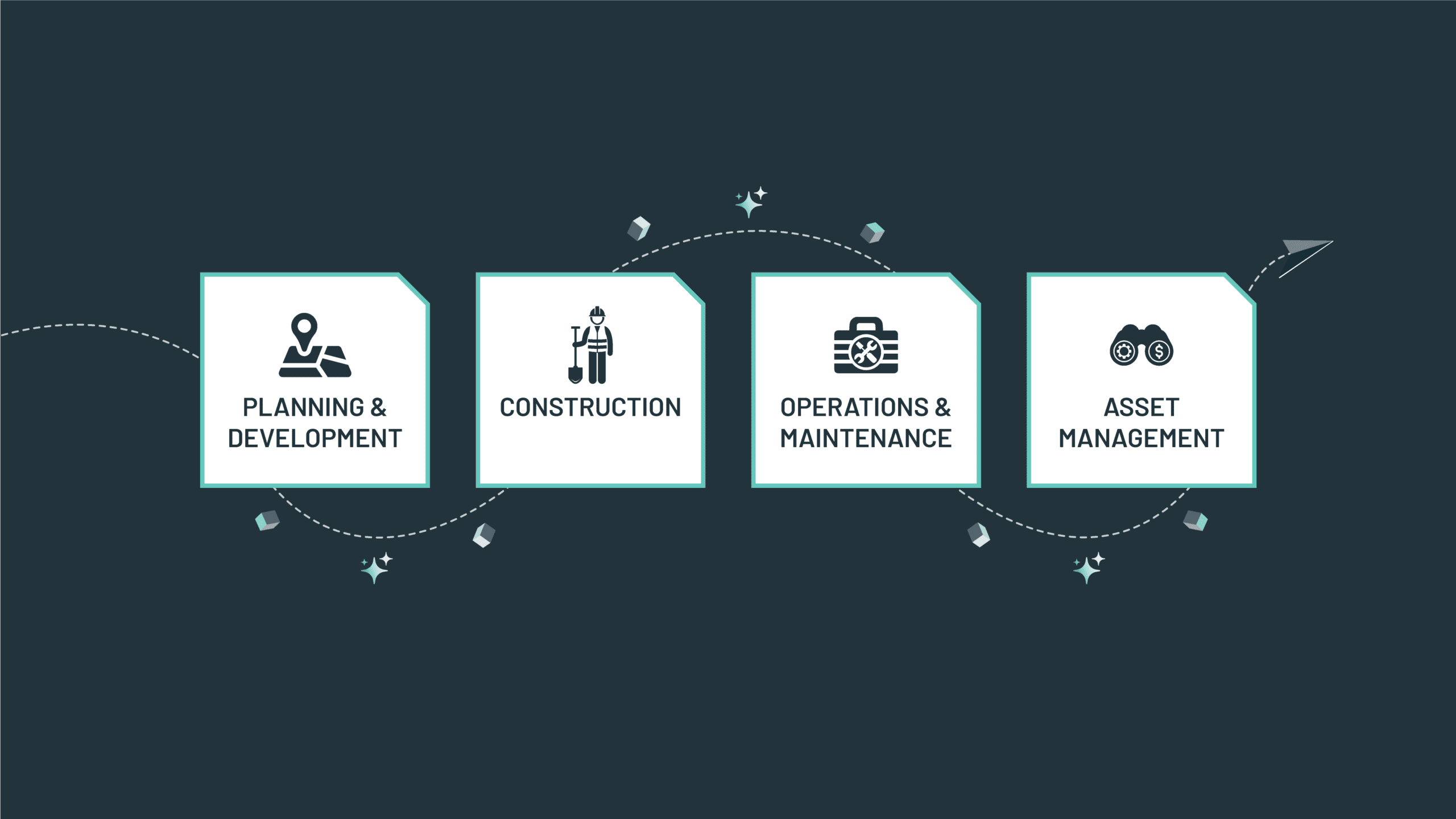
Instead of treating each project or site as a one-off, ALM gives you an end-to-end way to manage assets from planning and development, through construction, into operations and maintenance, and finally asset management and retirement.
In this guide, we’ll break down what ALM really means, where it fits in your day-to-day work, and how teams in digital infrastructure, energy transition, data centers, utilities, and real estate are using platforms like Sitetracker to put ALM into practice.
What Is Asset Lifecycle Management (ALM) and How Does it Work?
Asset Lifecycle Management (ALM) is the discipline of managing an asset through every stage of its life: from initial concept and planning, to design and construction, to daily operations, maintenance, and eventual decommissioning or replacement.
Where traditional “asset management” often focuses on tracking assets once they’re in service, ALM zooms out. It connects the end-to-end asset lifecycle including:
- Planning & Development – Where to build, what to build, approvals, feasibility, and business case
- Construction – How you execute builds on time and on budget
- Operations & Maintenance (O&M) – How assets perform once they’re live, and how you keep them running
- Asset Management – Long-term optimization, financial performance, and end-of-life decisions
Done well, ALM answers three big questions:
- Are we building the right assets, in the right locations, at the right time?
- Are we building and deploying them efficiently?
- Once they’re live, are we getting maximum uptime, safety, and ROI over their full life?
Modern ALM practices are especially important in asset-heavy industries that rely on distributed infrastructure and long project timelines—exactly the world of towers, fiber, EV chargers, solar farms, data centers, and utility networks.
But ALM is evolving. As infrastructure becomes more distributed, electrified, and AI-driven, organizations need a connected operating model that unifies planning, construction, operations, and long-term asset performance.
This shift is transforming ALM from a maintenance function into the strategic backbone of modern infrastructure delivery, and its impact varies across each major segment of critical infrastructure.
Why Managing the Critical Infrastructure Asset Lifecycle Matters Now
Let’s look at how ALM lands in our core sectors. The core challenge across all of them is the same: asset decisions made early in the lifecycle have a disproportionate impact on cost, performance, and risk later on.
Digital Infrastructure (Telecom, Fiber, 5G)
Telecom and fiber operators manage thousands (sometimes millions) of geographically dispersed sites—towers, small cells, fiber routes, edge data centers—making the networks increasingly complex to manage. To stay competitive, they have to:
- Deploy quickly in dense markets like Los Angeles, New York, London, and Paris
- Coordinate owners, operators, and contractors
- Keep existing networks online while expanding coverage
ALM brings planning, deployment, and O&M into a single framework, so teams can see where new builds are happening, how those builds impact existing assets, and what that means for long-term capacity and maintenance. Sitetracker, for example, supports telecom ALM by connecting large-scale deployments with ongoing maintenance across distributed networks.
Energy Transition (Renewables, Grid Modernization, EV Infrastructure)
The energy transition is massively asset-intensive—solar farms, wind turbines, battery storage, microgrids, EV charging networks, and upgraded distribution infrastructure. These projects often:
- Span years from planning to commissioning
- Depend on complex permitting and interconnection processes
- Require long-term performance monitoring and regulatory compliance
Energy and utility reports highlight how digital, data-driven asset management is essential to balancing risk, cost, and performance across these assets.
ALM helps energy players:
- Prioritize projects that deliver the most grid impact
- Ensure construction data flows into long-term O&M strategies
- Align CapEx and OpEx decisions across the full lifecycle
Data Centers
Data centers are at the heart of AI, cloud, and digital services. Operators must juggle capacity planning, power and cooling infrastructure, sustainability targets, and relentless uptime expectations.
Industry guidance shows that effective data center asset management requires lifecycle thinking—from procurement and deployment through maintenance and decommissioning—to keep risk and cost in check.
ALM lets data center operators:
- Plan expansions and retrofits with clear visibility into existing assets
- Coordinate construction and commissioning with future maintenance needs
- Track asset performance, downtime, and energy usage over time
Utilities and Public Infrastructure
Electric, gas, and water utilities, as well as transportation agencies, operate highly regulated, long-lived infrastructure—substations, lines, treatment plants, pipelines, roads, and bridges.
Effective asset lifecycle management helps utilities:
- Plan long-term investment scenarios
- Prioritize maintenance and renewals based on risk and condition
- Respond faster to storms and unexpected failures using real-time data
Real Estate and Built Environment
For real estate owners and facility operators, ALM provides a structured way to manage:
- Building systems (HVAC, elevators, security)
- ESG and sustainability investments
- Capital planning and refurbishments
A lifecycle view of building assets supports better budgeting, tenant experience, and long-term asset valuation.
Core Phases of Asset Lifecycle Management (ALM) Explained:
Although ALM spans from concept through retirement, three phases are where most infrastructure organizations feel the difference day-to-day: Planning & Development, Construction, and Operations & Maintenance.
1. Planning & Development: Where ALM Starts
Planning & Development is where ALM sets the foundation:
- Site selection and feasibility
- Business case and ROI modeling
- Permitting, zoning, and regulatory approvals
- Early design and engineering
- Stakeholder alignment (owners, operators, tenants, utilities, municipalities)
In North American and European markets, delays in permitting and early approvals can make or break rollout timelines for towers, fiber builds, and renewable projects. A lifecycle approach means you’re not just asking “Can we build here?” but also “How will this asset perform, and what will it cost us to operate, for the next 10–25 years?”
Common challenges
- Data scattered across spreadsheets, local GIS tools, email threads, and legacy systems
- Limited visibility into how planning decisions impact construction schedules and long-term O&M
- Hard to compare sites or projects across regions (for example, comparing a solar project in Texas with one in Spain)
How ALM helps
An ALM platform centralizes project, site, and asset data from the very first phase, creating a digital thread that follows each asset throughout its life.
How Sitetracker supports Planning & Development
Sitetracker’s Planning & Development solution allows critical infrastructure businesses to manage planning in the same platform as construction, O&M, and asset management, enabling data continuity and better decision-making at every stage of the asset lifecycle.
2. Construction: Turning Plans into Revenue-Generating Assets
Once projects are green-lit, the focus shifts to building, often at scale across multiple regions.
Construction in an ALM context includes:
- Detailed design and work breakdown
- Procurement of equipment and materials
- Vendor and contractor management
- Crew scheduling and dispatch
- Quality inspections, testing, and commissioning
In fast-moving markets like 5G, EV charging, and renewables, being able to replicate deployment playbooks across markets (e.g., rolling out EV chargers in California, New York, and the UK with consistent processes) is a major advantage.
Common challenges
- Fragmented project tools that don’t talk to asset records
- Little visibility from the field to the office
- Delays and rework caused by inaccurate or outdated site information
- Slow handoff into operations and maintenance
How ALM helps
ALM keeps construction tightly integrated with the asset’s long-term record. As-built data, commissioning details, and warranties become part of the asset profile that O&M teams rely on later.
How Sitetracker supports Construction
Sitetracker’s construction management software helps critical infrastructure companies build and install faster, on time and on budget, while maintaining data continuity into ongoing operations and maintenance.
3. Operations & Maintenance: Protecting Uptime and ROI
Once assets go live, the O&M phase is where value is either captured or lost.
For digital infrastructure, energy, utilities, data centers, and real estate, O&M covers:
- Preventive maintenance and inspection programs
- Corrective maintenance and trouble tickets
- Work order management and field service
- Condition monitoring and predictive maintenance
- Compliance, safety, and reporting
Industry research shows that lifecycle-based O&M strategies can extend asset life, reduce downtime, and lower total cost of ownership compared to reactive maintenance. (EZO.io)
Common challenges
- Technicians using disconnected mobile tools or manual processes
- Limited visibility into failure patterns and asset health
- Difficulty prioritizing work by risk, criticality, and customer impact
- O&M data not feeding back into planning and future project design
How ALM helps
ALM connects O&M data back to the entire lifecycle, so you can:
- See how construction quality affects long-term performance
- Use failure trends and cost data to inform future designs and vendor choices
- Identify when upgrades, retrofits, or replacements will deliver better ROI than continued maintenance
How Sitetracker supports O&M
Sitetracker’s Operations & Maintenance (O&M) solution gives critical infrastructure companies real-time visibility into field work, automates work orders, and helps teams manage distributed assets at scale. Recent enhancements further support proactive, intelligent O&M as part of complete ALM.
Asset Management: Closing the Loop
Beyond daily O&M, ALM also encompasses broader asset management activities:
- Asset registry and lifecycle records
- Financial planning, CapEx/OpEx, and depreciation
- Portfolio-level performance analytics
- End-of-life, decommissioning, and recycling decisions
How Sitetracker supports Asset Management
Sitetracker’s Asset Management solution manages assets in the same platform as planning, construction, and O&M, providing a continuous flow of data and more accurate decision-making across the entire lifecycle.
Building a Connected ALM Tech Stack
To make ALM real—not just a concept—you need technology that acts as a single source of truth for projects, sites, and assets.
Key capabilities to look for:
- Unified data model – One place for project data, asset records, financials, and documents
- GIS and mapping – Location-based views for towers, fiber routes, EV chargers, grid assets, and facilities
- Mobile field tools – Easy-to-use apps for technicians and construction crews
- Workflow automation – Standardized processes for approvals, work orders, and inspections
- Analytics and reporting – Dashboards for portfolio performance, risk, and utilization
- Open integrations – Connectivity with CRM, ERP, GIS, SCADA, and other systems
Platforms like Sitetracker bring together the data and workflows behind planning, construction, operations, and long-term performance so infrastructure teams can scale without losing visibility or control over their asset portfolios.
Getting Started with ALM in Your Organization
You don’t have to overhaul everything at once. A practical path to ALM looks like this:
- Assess where you are today
- How many systems hold project and asset data?
- Where are the biggest pain points—planning, construction, or O&M?
- Which business units (telecom, energy, data center, real estate) are most ready to change?
- Inventory your assets and data
- Capture what you have by location, type, age, condition, and criticality
- Identify gaps where data is incomplete or unreliable
- Pick a high-impact pilot
- Example: fiber rollouts in a key metro, solar projects in one region, or data centers in one country
- Define clear success metrics: reduced cycle times, lower truck rolls, fewer outages, better forecast accuracy
- Choose an ALM platform that fits your industries
- Prioritize solutions built for critical infrastructure, not just generic project tools
- Ensure strong support for distributed assets, contractors, and field operations
- Measure, learn, and scale
- Use pilot results to refine processes
- Roll out ALM practices across more regions, asset classes, and business units
Taken together, these steps help organizations build a more predictable, data-driven approach to managing assets across their entire lifecycle.
FAQs
Traditional asset management typically focuses on assets once they’re acquired and in service—tracking them, maintaining them, and sometimes managing depreciation.
ALM covers the full journey: planning, design, construction, commissioning, operation, maintenance, and end-of-life.
In other words, asset management is a subset of ALM.
Most of these systems are built to support one part of the asset lifecycle, not the whole thing.
– Project management and construction tools help teams plan work, track schedules, and deliver projects.
– CMMS and field service systems manage maintenance, inspections, and work orders once assets are in service.
– ERPs focus on financials, procurement, and budgeting.
Each tool is effective in its domain, but they operate independently. They don’t share a continuous view of the asset, and they don’t carry forward the information created in earlier phases.
An Asset Lifecycle Management platform is different because it connects planning, construction, commissioning, operations, maintenance, and long-term asset decisions in one coordinated system. The goal isn’t to replace these tools feature-for-feature — it’s to unify the data, workflows, and handoffs between phases so every team works from the same source of truth.
Using different tools for different phases is common, but it creates gaps that become costly as portfolios grow.
When planning lives in one system, construction updates in another, commissioning checklists in a third, and maintenance records in a fourth, critical information is lost or re-entered manually. This leads to:
– inconsistent handoffs
– duplicated work
– poor visibility across teams
– disconnected reporting
– difficulty understanding how decisions in one phase affect performance in another
The asset lifecycle isn’t linear; every phase influences the next and should inform decisions downstream. Separate tools can manage individual tasks, but they cannot maintain the continuity needed to improve timelines, uptime, reliability, and long-term cost.
An Asset Lifecycle Management approach fills these gaps by ensuring that data, decisions, and context flow across every phase of the asset’s life.
There’s no single right answer, but commonly:
– Asset owners / portfolio leaders set strategy and investment priorities
– Operations and engineering oversee technical standards and performance
– Project management / construction own delivery during build phases
– IT / digital support the ALM platform and integrations
In many organizations, ALM is governed by a cross-functional steering group that spans planning, delivery, operations, and finance.
Not at all. While large operators and utilities often lead ALM adoption, mid-sized contractors, regional operators, and emerging infrastructure providers can benefit just as much.
Smaller organizations often see outsized gains because they can:
– Standardize processes early
– Avoid building a patchwork of disconnected systems
– Scale into new markets without losing control of data and workflows
For industries like digital infrastructure, energy, data centers, utilities, and real estate, look for:
– Strong support for high-volume, distributed projects and sites
– Integrated project, asset, and field operations in one system
– Proven use cases across telecom, renewables, EV, and utilities
– Flexible workflows and integrations with your existing tools
Sitetracker, for example, positions itself as “the complete asset lifecycle management platform” built for critical infrastructure owners, operators, and contractors.