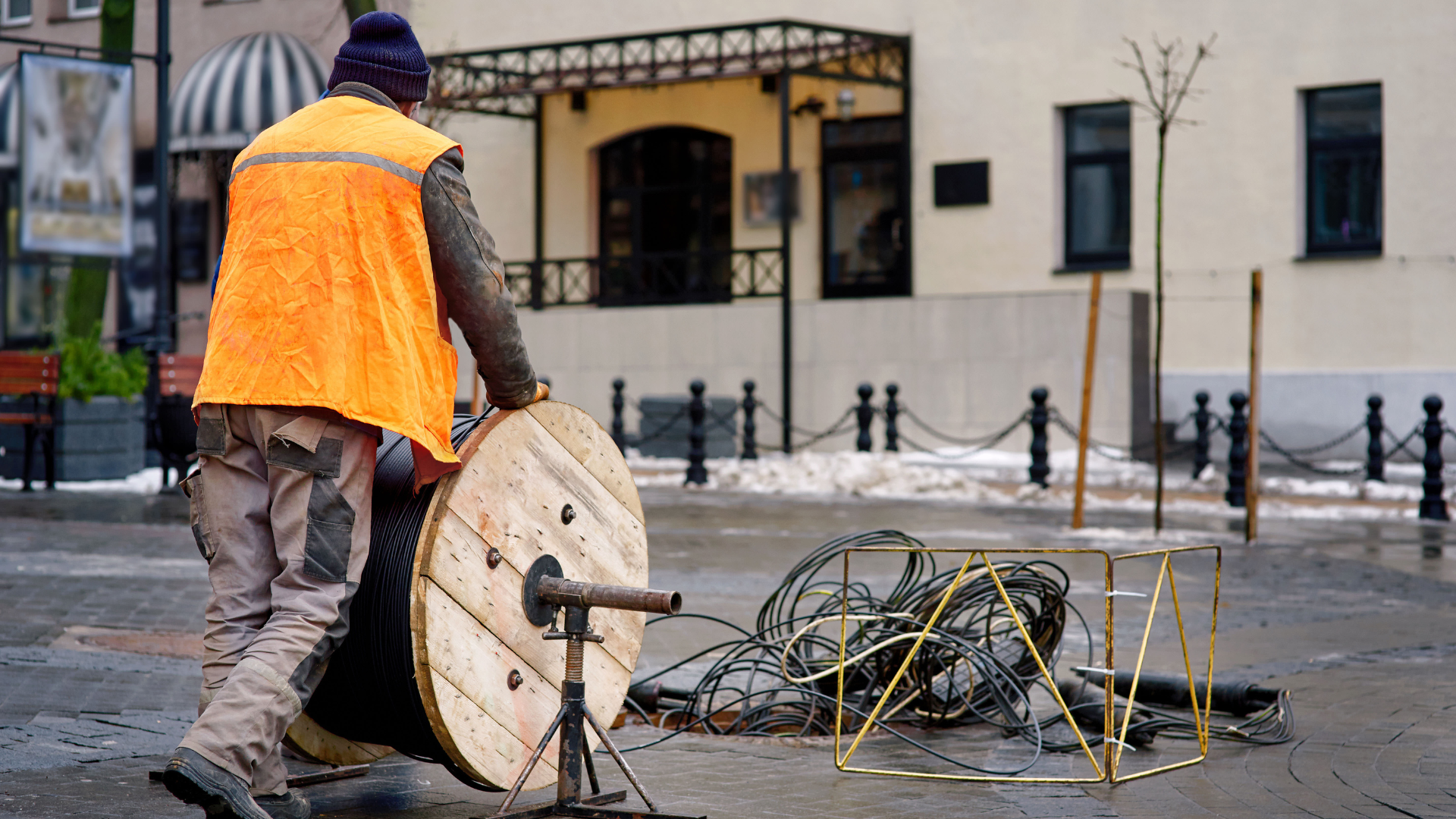
Fiber construction is where the real pressure shows up. It’s the phase with the most vendors, the most field crews, the most capital at risk, and the least room for misalignment. Every missed dependency, every outdated drawing, every unflagged permit, every unclear assignment—they all translate directly into time, cost, and customer impact.
Many teams assume construction delays stem from labor shortages, contractor performance, weather, inspection and locate backlogs, or equipment issues. Those challenges are real. But they’re often not the underlying cause of why fiber builds drift off schedule.
The deeper issue is structural: construction workflows are usually reactive, fragmented, and disconnected from the decisions made upstream. By the time field teams are mobilized, misalignments from planning, design, permitting, and procurement have already planted seeds of delay.
High-performing operators take a different approach. They treat construction as a connected execution system—not as a collection of isolated tasks. Sitetracker brings that system to life, giving teams real-time visibility, structured field workflows, and the operational discipline required to keep fiber builds moving.
Why Fiber Builds Really Fall Behind
Most construction problems don’t originate in the field. They simply appear there.
Breakdowns almost always trace back to:
- field crews receiving incomplete or outdated work packages
- permitting or utility dependencies discovered only after crews are on site
- long-lead materials that weren’t tracked against schedule
- vendors working from different versions of the plan
- tasks and dependencies managed in spreadsheets or text threads
- progress updates that vary by foreman, region, or subcontractor
When these inconsistencies compound, construction slows, regardless of how skilled the crews are. They’re the inevitable result of disconnected workflows and missing context. Sitetracker gives construction teams the clarity, structure, and shared context they need to stay ahead of the drift.
The Cost of Disconnected Construction Management
When construction execution isn’t tied to planning, design, and procurement, teams experience:
- idle crews waiting for permits, locates, or materials
- build sequences out of sync with utility approvals
- change orders caused by unclear or shifting scope
- construction packages that must be reissued multiple times
- missed inspections due to communication gaps
- close-out delays from scattered QA documentation
- rework driven by version confusion
These delays compound quickly, especially during multi-market expansion. And they aren’t isolated incidents. They’re the predictable outcomes of disconnected workflows.
Sitetracker reduces that compounding effect by connecting every construction workflow in one system—from crew assignment to QA close-out.
A Connected System Built to Fiber Builds Moving
High-performing operators don’t rely on after-the-fact reporting. They rely on live execution alignment, where everyone—field techs, foremen, subcontractors, construction managers, PMs, and executives—work from a shared picture of progress.
Sitetracker enables this by centralizing:
- construction packages and approvals
- work assignments and crew coordination
- GIS-linked tasks
- material and equipment usage
- permitting and inspection requirements
- quality assurance and close-out workflows
- Field updates and safety check-ins
- vendor performance tracking
This creates a continuous feedback loop between office and field, eliminating the lag that causes most delays.
Clear, Complete Construction Packages Every Time
Construction moves at the speed of clarity. When crews have complete, up-to-date packages, progress accelerates. When they don’t, the entire program pays the price. Sitetracker ensures crews always receive:
- the latest approved design
- linked permits and conditions
- material requirements
- tasks organized by sequence
- site-specific hazards and requirements
The result: fewer questions, fewer resets, and fewer surprises on site. Just clear, complete direction.
Smart Work Assignment and Crew Coordination
Work assignment is where many fiber teams unintentionally create chaos during the last mile of project delivery:
- crews receive jobs and work orders through text or email
- inconsistent check-ins and confirmations
- status updates that vary by foreman or vendor
Sitetracker replaces manual coordination with structured field workflows:
- jobs assigned through mobile
- real-time job acceptance
- automated check-in/check-out
- digital safety acknowledgments
- standardized task sequences
This reduces administrative friction that slows down construction managers, while improving accountability across internal and external crews.
Real-Time Visibility Into Progress and Blockers
Traditional reporting surfaces delays only after they’ve already affected the schedule. Construction delays rarely originate in the field—they simply become visible there. The real friction builds upstream, hidden inside disconnected workflows, version confusion, permitting uncertainty, and incomplete packages. Most tools smooth over those inconsistencies instead of exposing them.
Sitetracker doesn’t hide the friction—it surfaces it. And when teams finally share the same view of what’s blocking progress, construction stops drifting and starts moving again.
Sitetracker brings progress into real time through:
- live task and milestone updates
- photo-verified progress
- alerts when dependencies slip
- GIS-linked status
- visibility across all active builds
Construction managers no longer chase updates, hound their people about data entry or wait for weekly spreadsheets. They are proactively aware of what’s happening and what needs attention.
QA and Close-Out That Don’t Slow the Program Down
Close-out is one of the most underestimated bottlenecks in fiber deployment. When QA is inconsistent, documentation is scattered, or as-builts are incomplete, the program slows at the exact moment it should accelerate.
Sitetracker streamlines QA and close-out with:
- mobile capture of photos and measurements
- standardized checklists
- linkages to design and permits
- automated assembly of close-out packages
- instant handoff to Sales, Marketing and Operations
The result: clean, complete packages—without weeks of reconciliation.
Vendor Performance That’s Transparent and Measurable
Construction leaders often rely on gut feel to evaluate subcontractors because the data is fragmented. Sitetracker changes that dynamic. With standardized workflows and shared visibility, teams can see:
- which vendors are meeting milestones
- where rework originates
- which crews consistently perform
- how vendor performance impacts cost and timeline
This strengthens relationships with high performers and improves accountability without adding overhead.
More Predictable Builds, Fewer Surprises
Fiber construction will always involve complexity. But delays don’t have to be unpredictable. When teams operate from one connected system, with clear packages, structured field workflows, real-time visibility, and healthy data, builds move faster, variability drops and expansion becomes repeatable. Sitetracker makes that possible by giving construction teams the clarity and alignment they’ve always needed, but never had in one place.
Ready to bring control and momentum to your fiber builds? Request a demo.
FAQs
Because information lives in different systems, and crews often lack complete, consistent packages. Sitetracker unifies planning, design, permitting, and construction workflows.
By giving teams real-time visibility into progress, blockers, materials, and dependencies across every job and market.
Yes. Vendors and subcontractors use the same structured workflows, ensuring consistent reporting and accountability.
Yes. Technicians and foremen use Sitetracker Mobile to receive work, check in, complete tasks, upload photos, and document close-out.
Standardized checklists, photo documentation, and automated package assembly reduce manual effort and eliminate missing information.